Which Home Compost System Suits You? Comparing Materials and Methods
Problem: Choosing a Compost System That Actually Works for Your Home
Composting is an appealing way to turn kitchen scraps and yard trimmings into useful soil amendments, but the options can be confusing. Systems vary by materials, space, odor, maintenance and finished product. A tiny apartment, a suburban backyard and a rural homestead each demand different compromises. Picking the wrong method creates frustration—slow decomposition, pests, or a smelly bin—so it helps to compare methods side-by-side with your constraints and goals.
Principles: What to Consider When Comparing Materials and Methods
Four guiding principles make the comparison practical:
- Space and access: How much indoor or outdoor room do you have? Can you move materials easily, or is a static pile acceptable?
- Speed and control: Do you want finished compost quickly, or is a low-effort, slow approach fine? Some systems accelerate decomposition through aeration, heat or specialized microbes.
- Maintenance and time: How often can you tend the system—turning, draining, harvesting or feeding worms?
- Output and use: Are you aiming for garden-ready humus, a liquid fertilizer, or nutrient-dense worm castings?
Below, each method is described with the typical materials, main advantages, and common trade-offs.
Examples: Methods Compared
1. Outdoor Pile (Hot or Cold)
Materials: Loose yard waste, kitchen scraps, a place on bare soil; optional fencing or a basic bin.
Advantages: Low-cost, scalable, and suitable for large volumes. Hot composting (active turning, balanced greens and browns) can produce finished compost in a few months.
Trade-offs: Requires space and effort to manage temperatures and turn the pile. Cold piles are low-maintenance but slow and may attract pests if food scraps are added without burying.
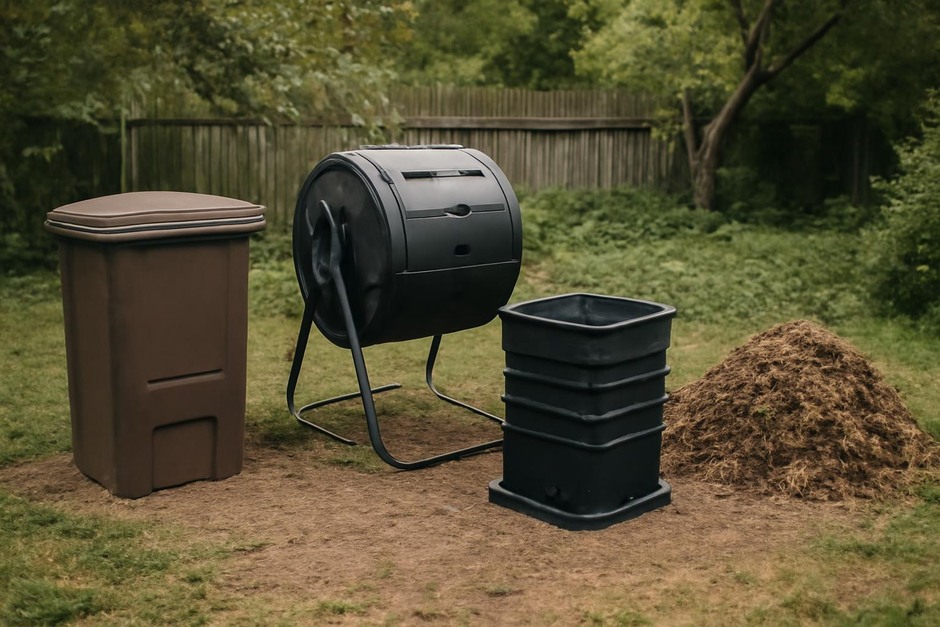
2. Stationary Compost Bin
Materials: Plastic or wooden bin with aeration; often placed in backyard or shed.
Advantages: Contained and neater than open piles; hides the compost and can slow moisture loss.
Trade-offs: Less airflow than tumblers, so decomposition can be slower. Bins can become compacted if not mixed occasionally.
3. Tumblers
Materials: Sealed rotating drum mounted on an axle.
Advantages: Easy to turn and aerate, faster decomposition than many stationary bins, pest-resistant due to elevated design.
Trade-offs: Capacity is limited by drum size; drums can be heavy when full, and insulation is minimal so winter composting slows.
4. Vermicompost (Worm Bins)
Materials: Shallow plastic or wooden trays, bedding (shredded paper, coir), red wriggler worms.
Advantages: Produces rich castings and a liquid fertilizer quickly in small spaces; ideal for apartments or balconies when kept indoors or on a covered porch.
Trade-offs: Requires more routine feeding and moisture control; worms are sensitive to temperatures and inappropriate food (heavy meat/dairy) and can suffer if neglected.
5. Bokashi (Fermentation)
Materials: Airtight bucket system and a Bokashi bran inoculant.
Advantages: Ferments all kitchen waste including meat and dairy, minimal odor when sealed, very compact and fast for pre-composting.
Trade-offs: Outputs are pickled waste that typically must be buried in soil or added to a compost pile to finish decomposition; requires purchasing bran and managing leachate.
Choosing by Typical Living Situations
- Apartment with small balcony: Vermicompost or Bokashi. Both are compact and limit odors; vermicompost gives finished castings, Bokashi handles a wider range of scraps.
- Suburban backyard: Tumblers or stationary bins. Tumblers speed things up and reduce pests; bins handle larger volume with less mechanical parts.
- Rural property with lots of yard waste: Outdoor hot piles or multiple bin systems. Scale and speed are advantages; you can integrate woody material into a larger system.
Practice Checklist: Setting Up and Maintaining a Home Compost System
- Assess space and climate: indoor vs outdoor, winter temperatures, available sunlight.
- Choose a method that matches your time and tolerance for maintenance (turning, draining, feeding).
- Stock necessary materials: browns (leaf litter, shredded paper), greens (kitchen scraps, fresh grass), bedding for worm bins, or Bokashi bran.
- Follow proper ratios: mix greens and browns to avoid odor; in vermicompost, feed small amounts and avoid citrus/grease overload.
- Monitor moisture and aeration: aim for damp but not soggy; turn or tumble regularly if using hot or tumbler systems.
- Manage pests: bury food scraps or use sealed containers (tumblers, Bokashi); avoid exposing piles to scavengers.
- Harvest and use: compost is ready when dark and crumbly; worm castings are usable as a concentrated soil amendment; Bokashi-treated material should be buried or completed in a pile.
Every method has trade-offs between speed, space, and ongoing effort. Match your goals—volume of waste, speed of output, and how you plan to use the compost—to the practical demands of each system, and you’ll end up with a working solution rather than an abandoned bin.